After 60, the body does not always signal its needs in the same way: the sensation of thirst decreases, muscle recovery slows down, and sleep becomes fragmented. Preserving health on a daily basis relies less on spectacular resolutions and more on regular adjustments that are adapted to the physiological changes associated with aging.
Vaccination after 65: a schedule to check every year
Vaccination prevention remains an underutilized lever among seniors. According to Santé publique France, the flu vaccination coverage remains insufficient among those over 65, with marked disparities depending on regions and social situations. Seasonal flu can lead to serious complications at this age, particularly for people living with a chronic illness.
On the pneumococcus side, recommendations have recently evolved. The Haute Autorité de santé now recommends prioritizing the CAPVAXIVE vaccine for at-risk adults and those aged 65 and older. This type of update often goes unnoticed if one does not regularly check in with their doctor or pharmacist.
For seniors in facilities, the HAS recommends that the flu vaccination remains recommended (and not mandatory), while advocating for a vaccination requirement for professionals in contact with at-risk individuals. Checking one’s vaccination status once a year, ideally before autumn, is a simple and often overlooked preventive measure. It is possible to consult Guide Seniors for health to find useful references on this topic.
Physical activity after 60: intensity and regularity matter more than duration
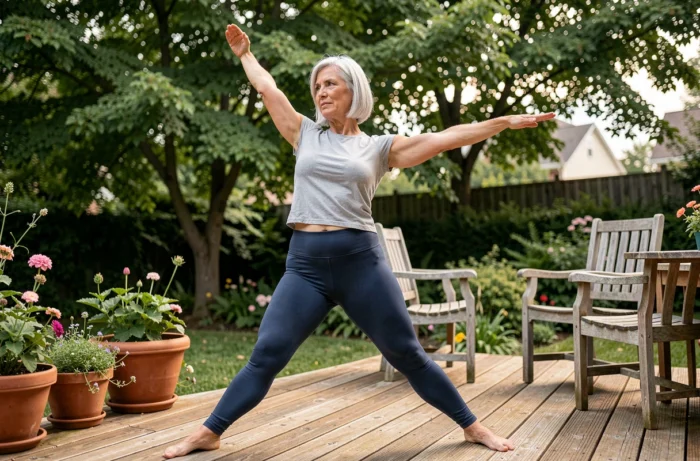
Walking regularly protects the cardiovascular system, but physical activity for seniors is not limited to walking. Maintaining muscle mass, which naturally declines with age, requires targeted strength training. A few bodyweight exercises or resistance band workouts, practiced two to three times a week, are enough to slow down the loss of strength.
Balance deserves special attention. Falls represent a major risk of loss of autonomy. Simple exercises (standing on one foot, walking heel-to-toe) can be integrated into the daily routine without equipment.
Three criteria for choosing an appropriate activity
- Regularity takes precedence over intensity: three short sessions per week provide more benefit than a long, isolated effort on the weekend
- The activity should engage both cardio, strength, and balance, not just one of these areas
- Enjoyment remains the best predictor of long-term adherence, whether it’s swimming, tai chi, or active gardening
Adapting effort to one’s physical condition of the day helps avoid injuries. Resuming an activity after a long break warrants medical advice, especially in cases of cardiovascular or joint disease.
Nutrition and hydration: what changes concretely after 60
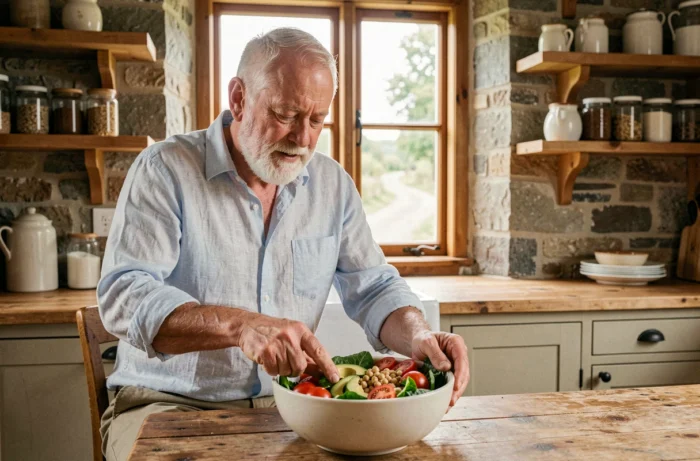
Metabolism evolves, but protein needs do not decrease. On the contrary, protein requirements slightly increase with age to compensate for natural muscle loss. Meat, fish, eggs, legumes: varying sources remains the most effective strategy.
Dehydration poses a specific risk among seniors, as the sensation of thirst diminishes. Drinking regularly without waiting to feel thirsty, including in the form of herbal teas or soups, helps maintain a good level of hydration.
Calcium and vitamin D: the duo to monitor
Bone strength depends on sufficient intake of calcium (dairy products, mineral waters rich in calcium) and vitamin D. However, the skin’s synthesis of vitamin D decreases with age, which may justify supplementation upon medical advice, especially during winter.
Dividing meals by adding a snack in the afternoon helps maintain sufficient caloric intake without overloading the stomach during main meals.
Seniors’ sleep: understanding fragmentation to respond better
Sleep naturally changes after 60. Deep sleep phases shorten, nighttime awakenings become more frequent, and falling asleep may occur earlier in the evening. These changes are physiological and do not necessarily indicate a sleep disorder.
A few adjustments can improve the quality of rest:
- Maintaining regular bedtimes and wake-up times, including on weekends, to stabilize the biological clock
- Limiting naps to about twenty minutes in the early afternoon to avoid delaying evening sleep onset
- Reducing screen exposure at least an hour before bedtime, as blue light delays melatonin secretion
- Avoiding caffeine after midday, as its duration of action increases with age
A fragmented sleep but with a sufficient total duration is not pathological. In contrast, persistent daytime sleepiness or snoring with breathing pauses warrants a consultation.
Social connection and cognitive health: an often-underestimated protective factor
Social isolation accelerates cognitive decline and worsens depressive states in older adults. Maintaining regular interactions, even brief ones, acts as a protective factor for mental health and memory.
Activities that combine intellectual stimulation and human contact (reading workshops, group classes, volunteering) offer a dual benefit. Reading, for example, engages working memory and attention, two cognitive functions sensitive to aging.
Diversifying social activities protects more than the frequency of a single type of contact. Participating in a walking group, chatting with neighbors, getting involved in an association: each context mobilizes different cognitive skills.
Prevention after 60 is less about a list of rules and more about the ability to adapt habits to the body’s signals. Checking one’s vaccination calendar, adjusting one’s diet, moving in varied ways, and maintaining social connections form a concrete foundation to be reassessed each year with a healthcare professional.