The home autonomy services (SAD), created by the reform initiated in 2023, change the game for the home care of seniors. By merging daily assistance and nursing care under the same structure, these new services address an old flaw: the fragmentation between SAAD, SSIAD, and SPASAD that forced families to coordinate multiple contacts themselves.
Understanding this new framework and the accompanying measures allows for more effective choices regarding the quality of life for elderly individuals.
Home autonomy services: what the SAAD-SSIAD merger changes concretely
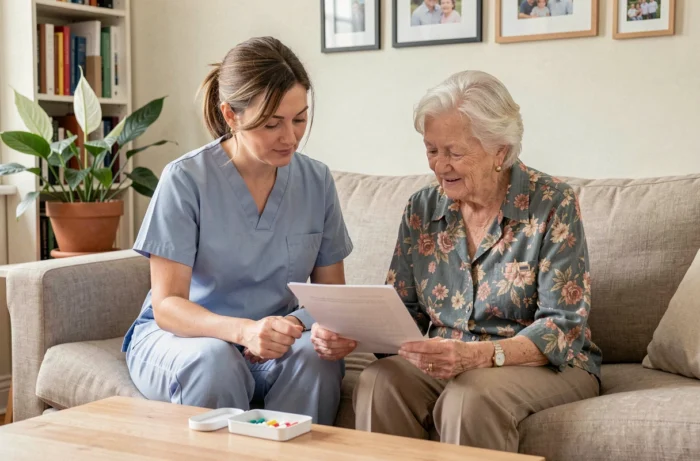
Before the reform, a senior with reduced autonomy could simultaneously depend on a meal, cleaning, or personal care assistance service, and a nursing care service for dressings or medication distribution. Two structures, two schedules, two points of contact. The SAD resolve this compartmentalization by offering a single point of contact for home assistance and care.
For SAD classified as “assistance and care,” the integration is direct: the same team manages daily support and nursing actions. For SAD “assistance,” the obligation is to refer to a health professional as soon as the situation requires it. We observe that this distinction remains poorly understood by families, who often assume that all SAD automatically include care services.
The gain is primarily measured in responsiveness. When the caregiver notices a deterioration (repeated falls, weight loss, confusion), the reporting circuit to the care component is shortened. This internal network reduces the time between the detection of a problem and medical intervention, a crucial point for preventing avoidable hospitalizations.
To identify services for seniors on Seniors Connexion, it is enough to cross-reference the type of SAD available in one’s municipality with the actual needs assessed during the GIR grid.
MaPrimeAdapt’: funding housing adaptation from 2024
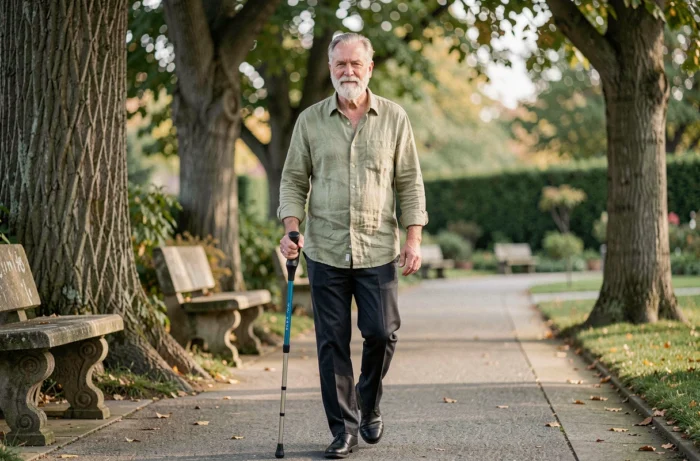
Adapting the home remains the most effective lever against falls, the leading cause of loss of autonomy among seniors. Since January 1, 2024, MaPrimeAdapt’ replaces the old Anah aids (notably “Habiter facile”) and centralizes the funding for accessibility works.
Eligible works cover a wide spectrum:
- Replacing the bathtub with a walk-in shower, installing grab bars and non-slip flooring in the bathroom
- Installing a stairlift or access ramp for multi-story homes
- Widening doors for wheelchair or walker passage
- Improving lighting and removing door thresholds to limit fall risks
Allocation depends on age, level of autonomy, and resources. A often overlooked point: prior approval from Anah must be obtained before starting the works. Starting a project without this validation risks a reimbursement refusal, even if the works comply with the specifications.
The project management assistant, an underestimated role
MaPrimeAdapt’ provides for the intervention of a project management assistant (AMO). This professional helps define the project, compile the file, and follow the administrative procedures. For an isolated senior or a caregiver already overwhelmed, this support prevents assembly errors that delay the disbursement of aid by several months.
We recommend contacting the AMO as soon as the reflection phase, even before requesting quotes. Their intervention is funded within the framework of the scheme and helps target truly priority works rather than dispersing the budget on secondary adjustments.
Fall prevention and safety equipment at home
Teleassistance has significantly evolved. Current devices go beyond the simple alert pendant: some integrate automatic fall detection via accelerometer, geolocation in case of unusual outings, and activity sensors that detect routine breaks (no movement in the kitchen in the morning, for example).
These devices make the most sense when coupled with a local response network. A device that alerts a call center 300 kilometers away has less impact than a system connected to a designated neighbor, a SAD, or a local nurse. The quality of the human network behind the technology determines the actual effectiveness of the system.
On the active prevention side, collective fall prevention workshops (balance, muscle strengthening, managing the fear of falling) are offered by pension funds and funder conferences in most departments. These programs significantly reduce the risk of falls among regular participants, provided they are followed over several weeks.
Support for caregivers: a often fragile link
The quality of life for seniors also directly depends on that of their caregivers. Exhaustion, social isolation, renunciation of care: family caregivers bear a burden that largely goes unnoticed by traditional systems.
Several solutions exist to relieve this pressure:
- Day care in specialized facilities, which offers a few hours of respite each week while maintaining cognitive stimulation for the senior
- The right to respite, which allows for financing temporary accommodation or increased home assistance when the caregiver needs a break
- Support and respite platforms, which offer discussion groups, psychological support, and help with care coordination
The real challenge is access to information. Many caregivers are unaware that they can benefit from these systems or give up due to administrative complexity. The new generation of SAD is intended to play a role in guiding towards these resources, but their deployment remains uneven across territories.
The landscape of services for seniors is structured around three complementary axes: SAD that unify assistance and care, centralized funding for housing adaptation via MaPrimeAdapt’, and prevention tools that combine technology and human support. The difficulty is no longer so much the existence of solutions as their concrete articulation at the local level, municipality by municipality.