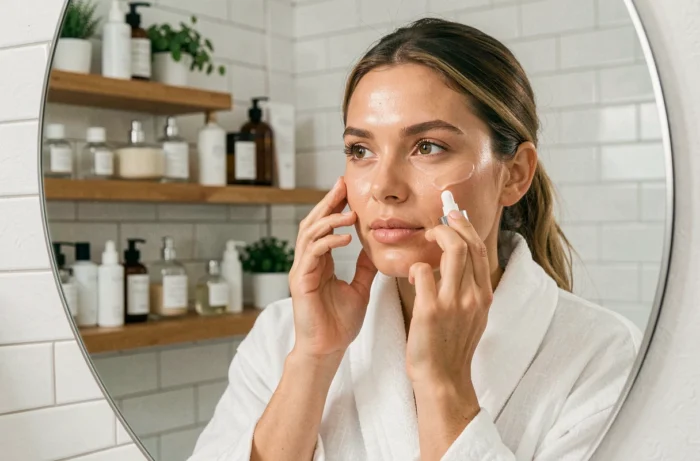
The European regulatory reformulation of cosmetics profoundly changes textures, active ingredients, and care protocols. Adapting daily beauty routines requires understanding these changes to make informed choices, whether regarding facial care, makeup, or sun protection.
Reformulation of scrubs and facial care: what the restriction of microplastics changes
Regulation (EU) 2023/2055 imposes a gradual restriction on microplastics intentionally added to cosmetics. Rinse-off products (facial scrubs, cleansing gels, shampoos) are affected starting October 17, 2027. Leave-on products (creams, body lotions, lotions) must be reformulated before October 17, 2029.
For color makeup, products for lips and nails have a deadline extending to October 17, 2035. This means that long-lasting textures, nail polishes, and certain “perfect skin” effect foundations will change formulation in the coming years.
We recommend checking the composition of your body and facial scrubs now. Alternatives based on plant powders or exfoliating acids (AHA, BHA, fruit enzymes) provide effective exfoliation without plastic particles. The trend towards enzymatic peels, already well established, will become the regulatory norm rather than just a marketing argument.
To delve deeper into these topics and find protocols suited to each skin type, Style Beauté’s beauty tips help target the active ingredients compatible with this new regulatory framework.
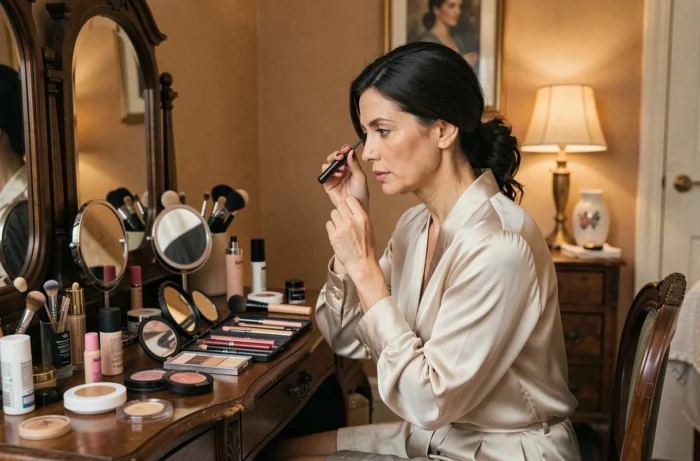
Morning beauty routine: serum, cream, and sun protection without compromise
Layering skincare in the morning is not just about piling on products. The order of application directly affects the penetration of active ingredients and the longevity of makeup.
Serum before cream: a matter of molecular weight
The serum should always be applied to clean, slightly damp skin, before the moisturizing cream. Its watery texture and smaller molecules allow it to penetrate deeply. Applying a cream before a serum creates a barrier that blocks concentrated active ingredients.
For combination to oily skin, a serum based on niacinamide or low molecular weight hyaluronic acid is often sufficient to regulate sebum without weighing down the hydrolipidic film. Dry skin benefits from a serum rich in ceramides, followed by an occlusive cream.
Sun filters: the European regulatory evolution to watch
Octocrylene, an organic UV filter long used in European sunscreens, is subject to a proposed restriction under the REACH regulation, put forth by ANSES to ECHA. This procedure could change the composition of sunscreens available on the European market in the coming years.
We observe that sunscreens integrated into day creams often remain insufficient in terms of UVA coverage. A dedicated product with an appropriate SPF, applied as the last step before makeup, reliably protects the skin.
Brow and lash makeup: technical gestures that change the result
Brow makeup structures the face more than any other gesture. Technique takes precedence over product.
- Brush the brows upwards with a dry brush before any application. This reveals sparse areas and prevents overloading already full areas.
- Use fine, short strokes with a pencil or felt-tip pen, in the direction of hair growth. A continuous line creates an immediately recognizable artificial effect.
- Set with a clear or tinted gel, brushing one last time upwards and then slightly outwards. Brow setting gel is a better alternative to wax, without a cardboard effect.
- For lashes, heat the eyelash curler for a few seconds with a hairdryer (warm, not hot) before use. The curl lasts significantly longer than when cold.
Body and hair care: natural products facing new constraints
The trend towards natural cosmetics encounters a common misunderstanding: natural does not always mean better tolerated. Some plant oils are comedogenic, and several important oils are among the most reported allergens in cosmetics.
A weekly body scrub with sugar or sea salt remains the simplest gesture to smooth the skin texture and prepare the epidermis for hydration. Applying a body lotion or oil on still damp skin, just after showering, significantly improves absorption and prolongs the moisturizing effect.
For hair, care begins in the shower. A conditioner applied only to lengths and ends, left on while washing the body, provides sufficient detangling for daily use. Heavy hair masks, used more than once a week, risk weighing down the fiber and greasing the scalp.
Natural look for everyday: fewer products, more technique
The “no makeup makeup” relies on a maximum of three products: a concealer, a cream blush, and a tinted lip balm. Foundation is not necessary if the concealer covers targeted areas (dark circles, localized redness, imperfections).
The cream blush, applied with fingers on the cheeks and blended towards the temples, gives a healthy glow effect that powders struggle to reproduce on dry or mature skin. The warmth of the finger melts the pigment into the skin for a transparent finish.
A tinted lip balm hydrates while adding a touch of color. We recommend formulas based on shea butter or beeswax, which hold better than balms made solely from petroleum jelly.
The minimalist approach is not a passing trend. The gradual restriction of microplastics and the reformulation of cosmetics naturally push towards shorter beauty routines, with products where each ingredient has an identifiable function. It’s better to master three gestures than to have a ten-step routine where half of the steps cancel each other out.