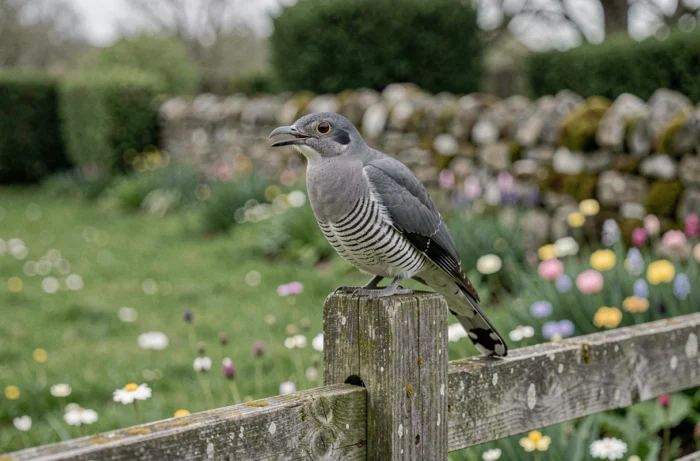
The repetitive song that is perceived as “eight eight” in a garden corresponds, in the vast majority of cases, to the great tit (Parus major). This songbird builds its vocalizations on a pattern of two or three notes repeated in a loop, often transcribed as “ti-tu, ti-tu” or “ti-dû, ti-dû”. Depending on the regions and individuals, the pitch varies enough for some ears to distinctly perceive an “eight eight” where others hear “si-tu” or “ti-tu”.
Why the great tit produces local song variants
Each male great tit has several song patterns in its repertoire. These patterns are not genetically fixed: they are acquired through learning from neighboring adults during the first weeks of life. The result is a kind of local dialect.
Two gardens separated by a few kilometers can host great tits whose songs differ notably. The binary pattern remains the same (two alternating notes, repeated), but the pitch, timbre, and rhythm change. It is precisely this plasticity that explains why the bird song that makes eight eight sparks so many discussions among neighbors, each describing it with different syllables.
A single male can use several types of songs depending on whether it is defending its territory, attracting a female, or interacting with a rival. The “eight eight” pattern is therefore just one of the possible expressions of this variable repertoire.
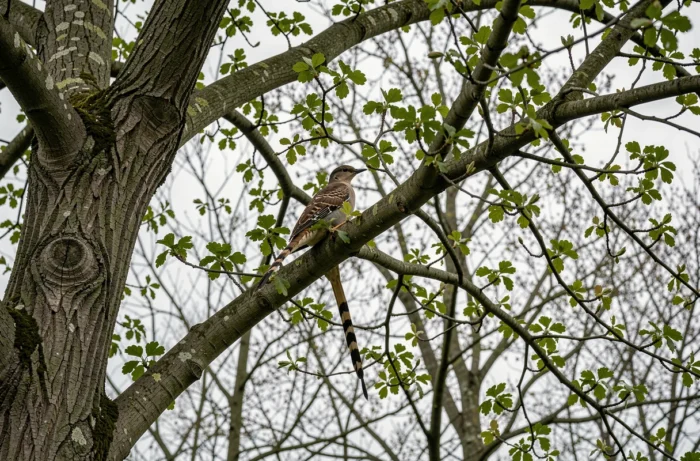
Recognizing the great tit by its plumage and behavior
Identifying the bird by its song is not always enough. The plumage of the great tit provides reliable visual cues. The head is black with well-defined white cheeks. The bright yellow belly is crossed by a central black band, wider in males than in females.
It is the largest representative of the paridae family in Europe. Its behavior in the garden is characteristic:
- It readily visits feeders and artificial nest boxes, unlike other shyer species
- It moves from branch to branch with acrobatic agility, often upside down
- It remains present year-round in French gardens, without migration, which distinguishes it from similarly singing passerines like the chiffchaff
The chiffchaff (Phylloscopus collybita), in fact, is sometimes confused with the great tit. Its song, often transcribed as “tchif-tchaf”, also relies on two alternating syllables. The chiffchaff’s plumage is uniformly brownish-green, without marked contrast, and its behavior is much more discreet.
Frequent confusion with the chiffchaff
The chiffchaff sings from the cover of foliage, rarely in the open. The great tit, on the other hand, willingly perches on an exposed branch or at the top of a shrub to emit its vocalizations. If the bird you hear remains invisible in the foliage and produces a drier, faster sound, the chiffchaff is a serious candidate.
The great tit sings perched in plain sight, the chiffchaff stays hidden: this behavioral criterion often settles the debate faster than an acoustic analysis.
The dawn chorus and the singing period of the great tit
The great tit actively participates in the dawn chorus, this morning concert where several species sing simultaneously in the minutes leading up to sunrise. It is among the first to make its presence known, which explains why the “eight eight” is often the first sound heard from an open window in spring.
The most intense singing period runs from February to June, corresponding to the nesting season. The male sings to delineate its territory and signal its presence to females. Outside this period, vocalizations become rarer and are limited to shorter contact calls.
Nesting and presence in the garden
The great tit nests in cavities: tree holes, wall cracks, nest boxes. The nest is lined with moss, hair, and feathers. The female usually lays eggs in spring, and the young leave the nest after a few weeks.
A garden that offers varied hedges, mature trees, and a few nest boxes has a good chance of welcoming a breeding pair. Insects form the primary food source for the young, making pesticide-free gardens particularly attractive to this species.
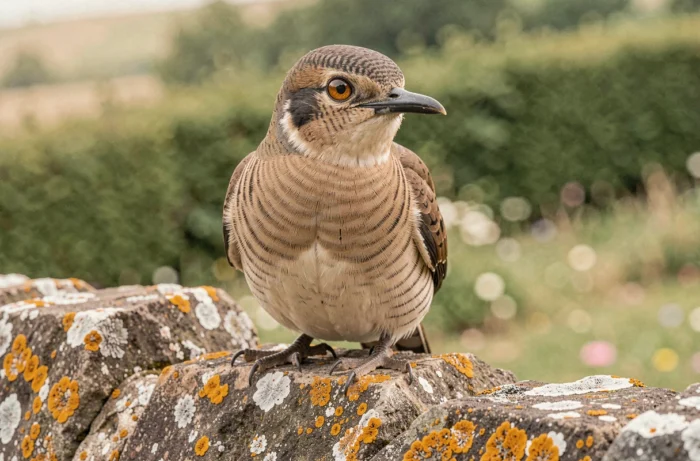
Attracting and observing the great tit in a garden
Encouraging the presence of this bird does not require complex arrangements. Great tits are opportunistic and adapt to very different environments, from city centers to rural gardens.
- Install a nest box with an appropriately sized entrance hole (paridae prefer openings that are neither too large nor too small, to avoid competition from larger species)
- Maintain areas of natural vegetation where insects thrive: wild hedges, wood piles, unmown areas
- In winter, offer unsalted sunflower seeds or fat balls, which supplement a diet depleted by the cold
- Avoid chemical treatments on plants, which reduce the insect population that the young depend on
Observation is facilitated by the great tit’s non-fearful temperament. With a little patience, it will approach within a few meters of a stationary observer, especially near a regularly stocked feeder.
The “eight eight” that resonates in French gardens at dawn is therefore the sonic signature of a bird that is both common and remarkably adaptable. The great tit remains the most likely species behind this binary song, even if the regional variation of its vocalizations will continue to fuel debates among nature enthusiasts.